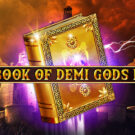
Book of Demi Gods II is a video slot developed by Spinomenal that draws on the rich imagery of ancient civilisations. Sitting within a popular genre of book-style slots, the game places players among gods, artefacts and hieroglyphic symbols in a setting that will feel familiar to fans of Egyptian or Greek mythology themes. If you are researching whether this title suits your playing style, the details below cover what you can reasonably expect.
Theme and Visual Style
The ancient civilisations theme is well-established in online slots, and Book of Demi Gods II leans into the tradition with ornate symbol designs typically featuring deity figures, sacred animals and classic artefact imagery. The background and soundtrack generally complement the setting, creating an atmosphere consistent with other titles in the book-slot subgenre. Spinomenal has a reputation for polished visual production, and this release reflects that studio standard.
RTP and Volatility
The stated return-to-player (RTP) for Book of Demi Gods II is 95.9%. This figure sits slightly below the widely cited 96% benchmark, meaning the theoretical long-run return to players is a touch lower than many comparable titles, though the difference in practice is modest.
Volatility is rated at 5 out of 6, which places it firmly in the high volatility category. High volatility slots typically pay out less frequently but tend to award larger sums when wins do occur. Players should expect longer dry spells between significant wins, and bankroll management becomes particularly relevant with a game of this profile. This type of volatility profile is well-suited to players who are comfortable with variance and are not relying on consistent small returns to sustain longer sessions.
Core Gameplay
As a book-style slot, Book of Demi Gods II typically follows a structure familiar to the genre: a standard reel grid, a scatter symbol in the form of a book, and a free spins round triggered by landing a set number of those scatters. During free spins, book-style games commonly reveal an expanding special symbol that can cover entire reels, significantly boosting win potential. The combination of a high-volatility engine with an expanding symbol mechanic is what drives the larger pay events in titles of this type.
Base game play is generally straightforward, with wins formed by matching symbols across paylines from left to right. The high-value symbols in ancient civilisation slots are usually the deity or hero figures, while lower-value symbols are represented by playing card ranks.
Is It Worth Playing?
Book of Demi Gods II will appeal most to players who enjoy the book-slot format, are comfortable with infrequent but potentially sizeable wins, and have an interest in ancient mythology aesthetics. The 95.9% RTP is competitive enough for casual research purposes, though high volatility means individual sessions can vary considerably from that theoretical figure. As with any slot, it is advisable to set a session budget before playing and treat any winnings as a bonus rather than an expectation.
Where Can I Play Book Of Demi Gods II?
Book Of Demi Gods II is available at a number of sweepstakes casinos. Our featured casino, Rune Riches, carries more than 3,000 slots and instant win titles, with player versus player battles and fast redemptions. New players receive 15,000 Gold Coins plus 1.5 Sweeps Coins. You can also read our full Rune Riches review first.
Frequently Asked Questions
What is the RTP of Book of Demi Gods II?
The RTP is 95.9%, representing the theoretical percentage of wagered money returned to players over a large number of spins.
How volatile is Book of Demi Gods II?
The game has a volatility rating of 5 out of 6, classifying it as high volatility. Wins tend to be less frequent but larger in size when they do land.
Who developed Book of Demi Gods II?
The game was developed by Spinomenal, a studio known for a wide portfolio of video slots across various themes.